Adopting a 'food systems' approach: lessons from Benin, Madagascar and the DRC
In recent years, consensus has grown on the importance of taking a ‘food systems approach’ to transforming the way we produce and consume food in order to better achieve interlinked social, health, and environmental goals. Yet what does this mean in practice?
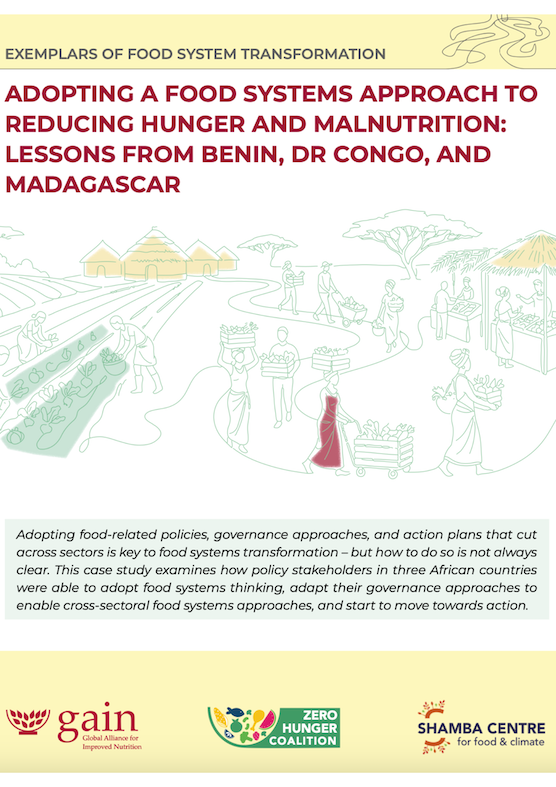
To help understand how countries are operationalising 'food systems', GAIN, with the support of the Zero Hunger Coalition and the Shamba Centre for Food & Climate, has developed a case study on the experiences in Benin, Democratic Republic of the Congo and Madagascar.
This case study examines how policy stakeholders were able to adopt food systems thinking, adapt their governance approaches to enable cross-sectoral food systems approaches, and start to move towards action. This new way of framing food-related challenges as being systems issues, as opposed to sectoral ones, represented an important change in setting the national policy agenda.
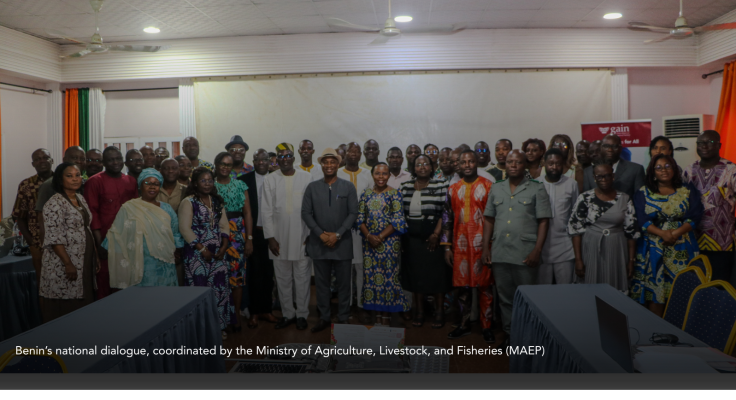
The case study was conducted alongside a ‘South-South Learning’ workshop that brought together stakeholders from these countries to learn about approaches to food systems transformation adopted.