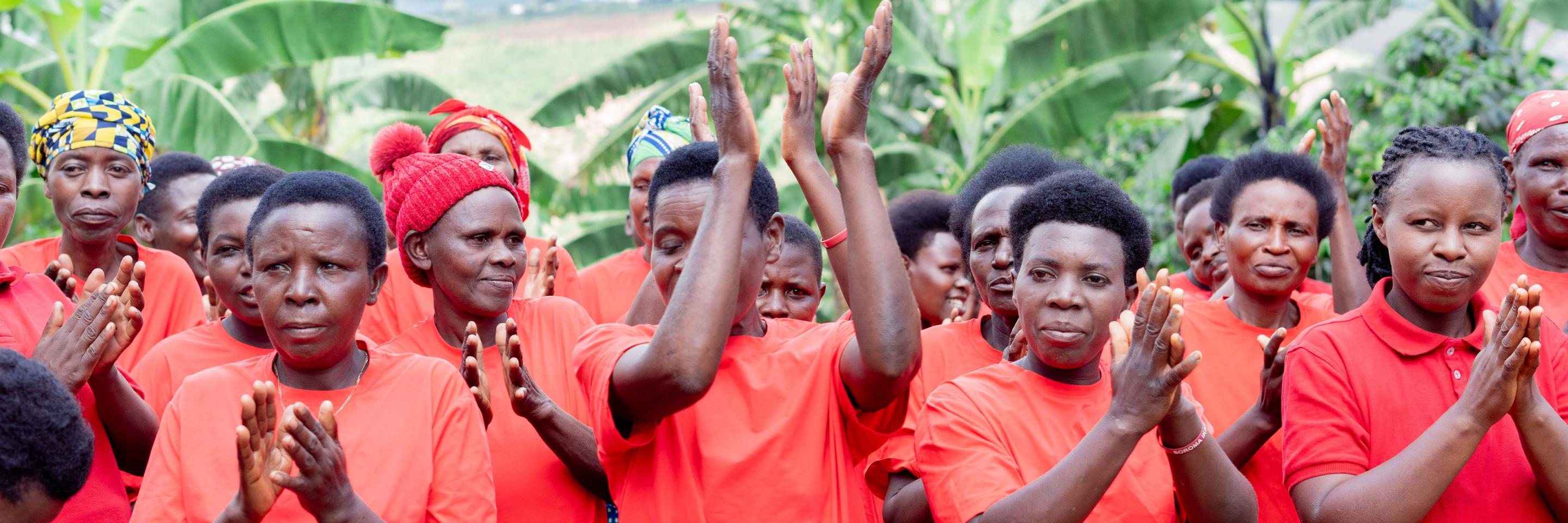
Driving transformative change to women farmers
In Africa, women are central to food production and rural economies. Yet in many of our countries, the laws and policies shaping agriculture and food systems still do not fully reflect their roles, their needs, or the barriers they face. This gap between contribution and recognition continues to limit women in terms of their productivity, their rights, and economic opportunities.
For this reason, we need to leverage policy and legal frameworks to change this reality.
First, we need to secure the rights of women over land, resources, and decision-making. Across Africa, women farmers continue to face discriminatory inheritance laws, unequal land ownership, and limited access to water, finance, and technology. A gender-transformative legal framework can correct this by guaranteeing equal land and inheritance rights, harmonising family and land laws with gender commitments, ensuring that women are represented in local land governance bodies, and embedding gender equality in agricultural subsidies, extension services, and access to markets.
If women have the same access to productive resources as do men, food insecurity in Africa would fall dramatically. This is not a theoretical argument—it is an economic and social imperative.
Second, we need to address the structural barriers that go beyond agriculture. Women farmers cannot be empowered if care work remains invisible, if financial services exclude them, or if climate adaptation programmes fail to reach them. These barriers determine who has the time, resources, and resilience to participate in agriculture.
For this reason, policy reform must also tackle the burden of unpaid care work, the barriers to credit and insurance, digital exclusion, and the vulnerability to climate-related shocks. Legal frameworks should integrate and address multiple issues - agriculture, finance, climate, social protection, and education.
Third, we need accountability mechanisms. Law only matters if it is implemented. For this reason, we need gender-responsive budgets, mandatory reporting on access to services, and disaggregated data systems that make women visible in our statistics.
This follows the spirit of the International Women’s Day as well as the Year of the Woman Farmer.
Actions are already underway in various parts of Africa. For example, the East African Legislative Assembly has introduced the EAC Gender Equality and Equity Bill, which seeks to harmonize national laws and secure women’s rights across sectors, including agriculture, land governance, and economic participation.
In addition, at the end of 2025, the Pan-African Parliament adopted a Model Law that provides guidance to African Union Member States on strengthening their legal, institutional and regulatory frameworks on gender equality and equity. It offers a template for lawmakers to advance gender equality. Africa’s continental development agenda - Agenda2063 and the new iteration of CAADP- also recognises that empowering women is central to achieving sustainable food systems and ending hunger.
We are moving in the right direction: from recognition to rights, from visibility to power, and from marginalisation to leadership.
But we need to accelerate this change. On the International Day of Women, held in the Year of the Woman Farmer, let’s not celebrate women for one day - or one year. Let’s invest in their land rights, their access to finance, technologies, and leadership every day of every year.